
Follow a Simple Foundation
As a chef, cooking for my dog isn’t very different from cooking for myself or my family. I don’t overcomplicate it—I follow a simple foundation and adjust based on what I have, what’s in season, and what I’m trying to achieve that week.
That’s the real mindset shift. It’s not about creating one perfect recipe with 15 ingredients. It’s about building balanced, homemade dog food over time using real, fresh ingredients.
Start with a Simple Formula
Every meal I make follows the same basic structure:
- A liquid
- A grain or carbohydrate
- A protein
- Vegetables
That’s it. Once you understand that foundation, everything else becomes flexible.
Rotate, Don’t Repeat
One of the biggest misconceptions about homemade dog food is that every single meal has to be perfectly balanced. In reality, balance happens over time.
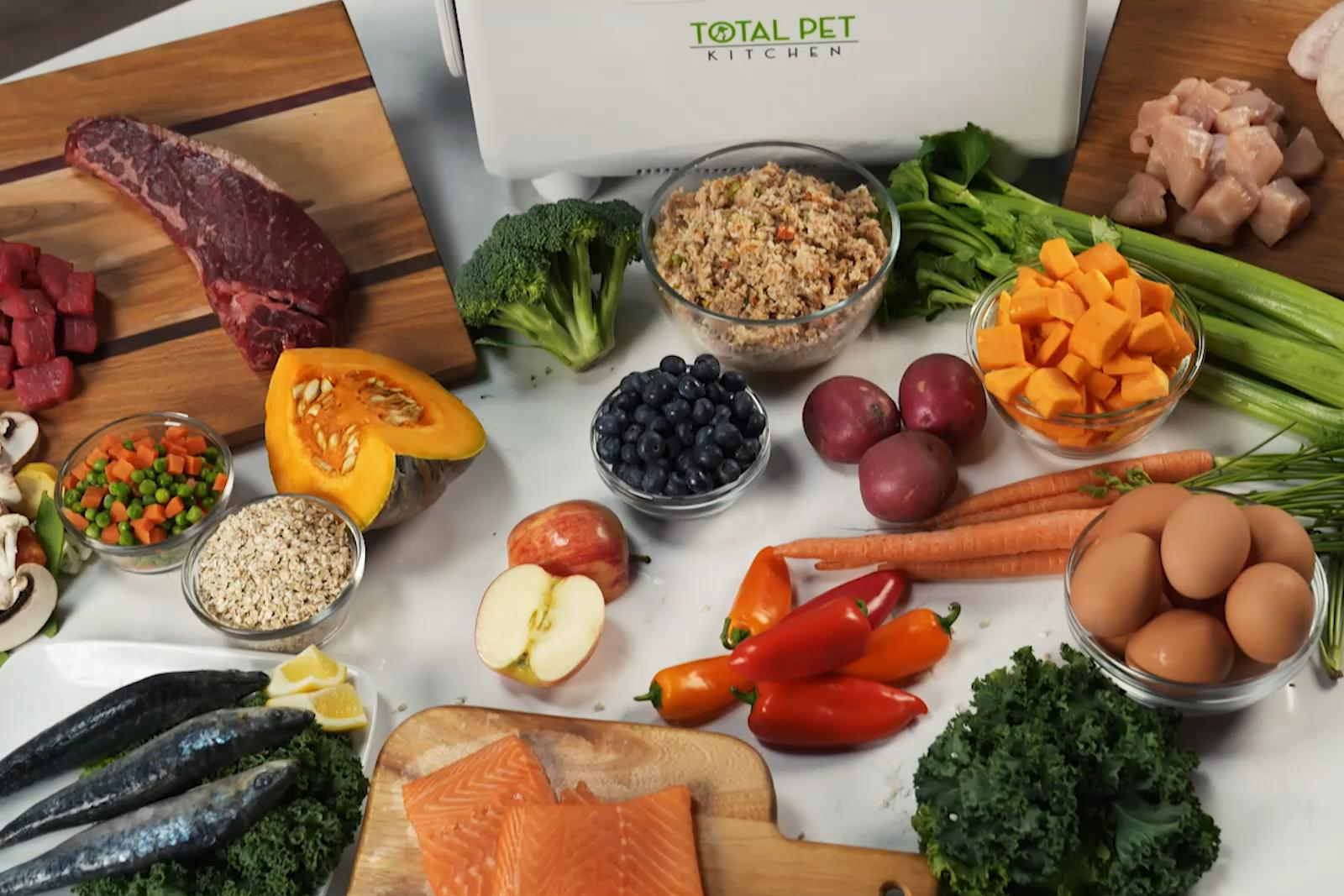
Some weeks I’ll use beef; other weeks, chicken or turkey. I also rotate in fish like salmon, cod, sardines, or mackerel for added omega-3 fatty acids. Occasionally, I’ll switch things up with duck or bison.
The same goes for grains—white rice, brown rice, barley, quinoa—and vegetables, which change depending on what’s fresh or available.
It’s no different than how we eat. You wouldn’t eat the same exact meal every day for the rest of your life—even if it’s healthy.
Use What You Already Buy
One of the easiest ways to make homemade dog food sustainable is to use the same ingredients you’re already buying for your family.
If I pick up a beef shoulder, I’ll portion some out for my dog and save the rest for a stew. If I’m cooking broccoli, I’ll use the florets for us and the stems—where many nutrients are—for my dog.
The same applies to vegetables like asparagus and cauliflower. It’s about being efficient, reducing waste, and getting more value out of what you already buy.
When I cook eggs during the week, I save the eggshells, rinse them, dehydrate them in the oven at 185°F for about 10–20 minutes, then crush them. It’s a simple way to add natural calcium back into your dog’s diet.
Ingredients Are Flexible
You don’t need anything complicated to get started.
Liquids:
Water works perfectly, or you can rotate in bone broths like chicken, beef, or pork. Even vegetable broth works—as long as it doesn’t contain ingredients dogs are sensitive to, like onions.
Grains & Add-Ons:
Rice, barley, bulgur, or quinoa are all great options. You can also add nutrient boosters like crushed hemp seeds or chia seeds.
Proteins:
Beef, pork, chicken, turkey, duck, bison, and fish like salmon, cod, sardines, and mackerel all work well. You can also include organ meats like liver and kidney, or nutrient-rich muscle meats like hearts and gizzards.
Vegetables:
A mix is ideal:
- Root vegetables: carrots, potatoes, sweet potatoes
- Greens: spinach, broccoli, peas, kale
- Squash: pumpkin, calabaza, butternut
These provide fiber, vitamins, and digestive support.
Finish Strong: Add Nutrients at the End
As a chef, I like to finish meals with ingredients that don’t need to be cooked. This helps preserve their nutritional value.
After cooking, I’ll mix in:
- Blueberries
- Nutritional yeast (not baker’s yeast)
- A drizzle of olive oil or walnut oil
- Ground eggshells
- A high-quality vitamin supplement to help fill nutritional gaps
These small additions help round out the meal with essential vitamins, minerals, and healthy fats.
It’s Just Meal Prep – Now for Your Dog
At the end of the day, this is just meal prep—now you’re doing it for your dog.
There’s a little prep upfront, but it pays off. I usually prepare enough for 2–3 batches at a time. I’ll cook one batch, give the unit a quick rinse, then move on to the next.
Once everything is done, I chill the food, portion it into two-day servings, and freeze the rest.
You’re not cooking every day—you’re typically preparing enough to last 2–3 weeks.
That means you always have fresh dog food ready to go, you know exactly what went into it, and you know when it was made.
The Hard Part Isn’t Cooking – It’s Consistency
Cooking for your dog isn’t difficult. The real challenge is staying consistent.
Using multiple pots, grinding, and mixing—it all adds up. That’s where most people fall off. Not because they don’t want to do it, but because it becomes too time-consuming.
Where Total Pet Kitchen Comes In
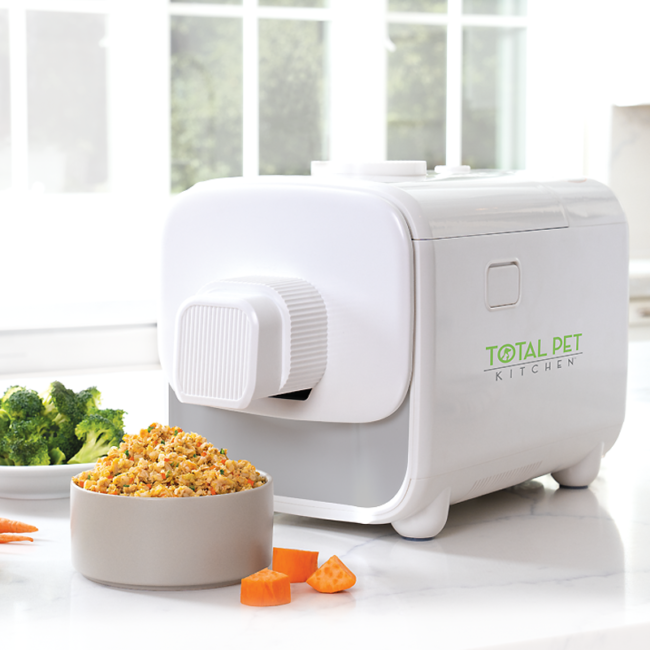
That’s exactly why we created Total Pet Kitchen.
It takes everything I just described and simplifies it into one streamlined process. Just add your ingredients, and the unit gently cooks, mixes, grinds, and dispenses the meal.
No multiple steps. No extra equipment. No guesswork.
It allows you to cook the way a chef thinks – simple, flexible, and ingredient-driven – but in a way that actually fits into your daily routine.
Keep It Simple
At the end of the day, cooking homemade dog food should feel natural.
- Use real, fresh ingredients
- Rotate proteins, grains, and vegetables
- Finish with nutrient-rich additions
- Focus on balance over time—not perfection in one bowl
That’s how I cook. And with Total Pet Kitchen, it’s something any pet parent can do.
By George Cruz