
Freshness is measured from the moment it’s cooked until the moment it’s served.
The shorter that journey, the fresher the meal.
Walk through any pet store or browse online, and one word appears everywhere: Fresh
- Fresh recipes.
- Fresh meals.
- Freshly prepared.
- Freshly delivered.
The popularity of fresh pet food is wonderful news. More pet parents than ever are looking beyond heavily processed kibble and asking an important question:
“Can I feed my dog something better?”
The answer is yes.
But there’s another question that’s asked far less often:
What does “fresh” really mean?
When you think about it, the freshest meal your dog can eat isn’t necessarily one delivered in a refrigerated box.
It’s the one you prepare yourself.
Freshly Prepared vs. Freshly Cooked
Imagine cooking dinner for your own family.
You stop by the grocery store on the way home. You pick up fresh chicken, vegetables, and rice. You prepare the meal in your own kitchen, and everyone sits down to eat.
That’s what most of us think of as fresh.
Now compare that with a meal prepared in a commercial facility, packaged, refrigerated or frozen, transported, delivered, and stored until it’s ready to serve.
Both meals may begin with quality ingredients.
But only one was freshly cooked in your own kitchen.
That’s an important distinction.
The Freshness Clock Starts the Moment Food Is Cooked
One way to think about freshness is to imagine a clock.
The moment food is cooked, that clock starts ticking.
For homemade meals, that clock may run for only a few hours before your dog enjoys dinner.
Commercially prepared meals follow a much longer journey.
Even premium subscription meals typically go through several steps before reaching your dog’s bowl:
- Prepared and cooked in a commercial production facility
- Packaged for distribution
- Refrigerated or frozen to maintain quality during storage and transport
- Stored before shipment
- Transported through distribution centers
- Delivered to your home
- Stored again in your refrigerator or freezer until feeding time
Depending on the product and delivery schedule, the meal may have been prepared days—or sometimes even weeks—before your dog finally eats it.
That doesn’t necessarily make it a poor-quality meal.
It simply isn’t the same as food freshly prepared in your own kitchen.
Bowl A or Bowl B?
Imagine your dog has two dinner bowls waiting.
Bowl A
- Fresh chicken purchased this morning.
- Fresh vegetables from your grocery store.
- Brown rice cooked today.
- Prepared in your kitchen.
- Served the same day.
Bowl B
- Prepared in a commercial kitchen.
- Packaged for distribution.
- Refrigerated or frozen during storage and transportation.
- Delivered to your home.
- Stored again until feeding time.
Both meals may contain quality ingredients.
But only one meal traveled just a few steps—from your stove to your dog’s bowl.
That’s the freshness difference.
Why Homemade Food Doesn’t Need Preservatives
When you cook at home, you’re preparing food for your own dog—not for warehouses, shipping trucks, or long distribution routes.
Just like meals you prepare for your own family, homemade pet food is meant to be enjoyed fresh or stored safely in your refrigerator or freezer until it’s served.
Because you’re cooking for immediate use or short-term storage, there’s no need to formulate the food for commercial distribution.
Commercial pet foods, by contrast, are designed to move through a supply chain before they reach your home. Depending on the product, manufacturers may rely on refrigeration, freezing, vacuum sealing, high-pressure processing (HPP), or other approved preservation methods to maintain quality and food safety during storage and transportation.
The difference isn’t about whether one approach is “good” or “bad.”
It’s about where the food begins.
Homemade meals begin in your kitchen.
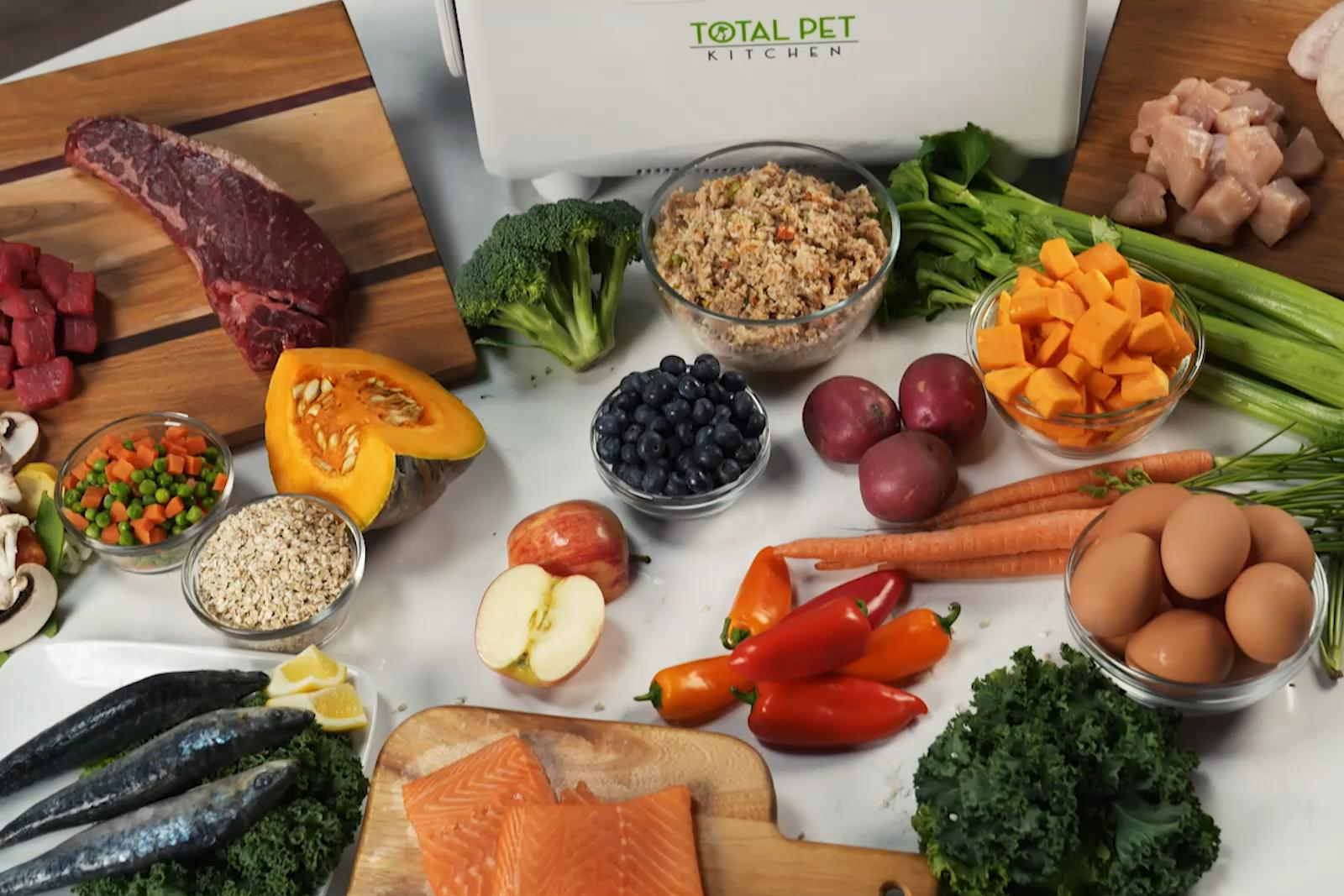
Every Ingredient Is Your Choice
Perhaps the greatest advantage of cooking at home isn’t simply freshness.
It’s control.
Every ingredient that goes into your dog’s bowl is one you selected yourself.
- Fresh chicken.
- Lean turkey.
- Beef.
- Salmon
- Sweet potatoes.
- Brown rice.
- Carrots
- Green beans.
- Spinach
- Blueberries
You know where they came from because you bought them.
There are no surprises.
No mystery ingredients.
No wondering what an unfamiliar ingredient on a label actually means.
Every meal begins with foods you recognize.
Every Dog Deserves an Individual Recipe
No two dogs are exactly alike.
Some thrive on chicken.
Others prefer fish.
Some need lower-fat meals.
Others have food sensitivities or allergies.
When you prepare meals at home, you’re not limited to a fixed menu.
You can rotate proteins, introduce seasonal vegetables, adjust portions, and work with your veterinarian to prepare recipes that match your dog’s individual nutritional needs.
Your dog’s meals become as unique as they are.
Fresh Doesn’t Have to Be Complicated
For years, homemade dog food came with one major obstacle:
-
- Time
- Cooking meat in one pot.
- Vegetables in another.
- Rice in another.
- Grinding.
- Mixing.
- Cooling.
- Cleaning
- Repeating the process every week.
That’s exactly the frustration that inspired Total Pet Kitchen.
Our founder, a professional chef, wanted to feed his own dog, Jill, fresh homemade meals every day. But after spending hours every week cooking and cleaning, he asked a simple question:
Why isn’t there one appliance that does it all?
That question became Total Pet Kitchen.
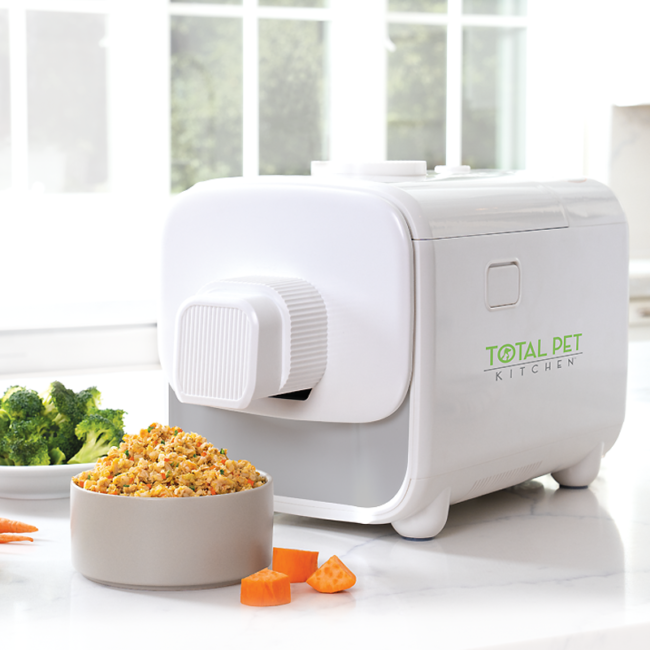
One appliance that cooks, mixes, grinds, and prepares complete homemade pet meals in about an hour.
- No multiple pots.
- No manual grinding.
- No complicated cleanup.
- Just real food made simply.
The Last Mile of Freshness
Every meal has a journey.
For commercially prepared pet food, that journey may include a production kitchen, packaging, refrigeration or freezing, transportation, distribution, delivery, and storage before it reaches your dog’s bowl.
For homemade food, the journey is much shorter.
It starts with ingredients you selected yourself.
It ends a few steps away—at your dog’s dinner bowl.
That final distance, from your kitchen to your pet, may be only a few feet.
And that’s a difference no delivery service can replicate.
Freshness isn’t just about ingredients.
It’s about how close your dog’s meal is to the moment it was prepared.
The Freshest Meal Begins at Home
Subscription services have helped many pet parents recognize that dogs deserve real food made with quality ingredients, and they’ve played an important role in moving the industry beyond heavily processed diets.
But if your goal is the freshest meal possible, there’s one step beyond having food delivered.
- Cook it yourself.
- Fresh ingredients from your local grocery store.
- Recipes you control.
- Meals prepared in your own kitchen.
- Served with love to the dog waiting patiently by your feet.
Because when it comes to freshness, nothing is quite like homemade.
About Total Pet Kitchen
Total Pet Kitchen was created from the belief that feeding fresh food to pets shouldn’t require hours in the kitchen. Combining cooking, mixing, grinding, and dispensing into one easy-to-use appliance, Total Pet Kitchen makes it simple for pet parents to prepare wholesome homemade meals using ingredients they know and trust.
Fresh ingredients. Freshly cooked. Freshly served.
That’s the Total Pet Kitchen difference.
By Riley McGrath